Selling a Business to Its Employees: What Rutgers Researchers Found
📷 Photo: WizSnaps
Picture a hardware store on a main street. The owner opened it thirty years ago. She knows the regulars by name, and so do the four people who work the counter with her. Now she wants to retire.
Her options usually come down to two. She can sell to whoever pays the most, or she can close. An outside buyer might fold the store into a chain, cut staff or move the work somewhere cheaper. Closing ends the jobs and the name at once. There is a third option, and a research center at Rutgers University has spent years studying it.
Who is behind the research
Rutgers is New Jersey's state university. Its School of Management and Labor Relations is home to the Institute for the Study of Employee Ownership and Profit Sharing, which describes itself as the oldest and largest university-based center of its kind. It studies how workers come to own shares of the companies they work for, and what happens when they do. It also runs the NJ/NY Center for Employee Ownership, which gives practical help to businesses in those two states.
What the study found
In April 2026, the institute published a report by Adria Scharf, Oyindamola Ijewere and Matt Mazewski. It is built on in-depth interviews with 23 company owners.
Those owners described selling to employees as a practical, financially competitive way to exit. Many reached fair market value, sometimes comparable to private equity. They said it let them keep jobs in place, keep the company's identity and reward the people who helped build it. Some turned down outside buyers because they worried about layoffs or the business being moved.
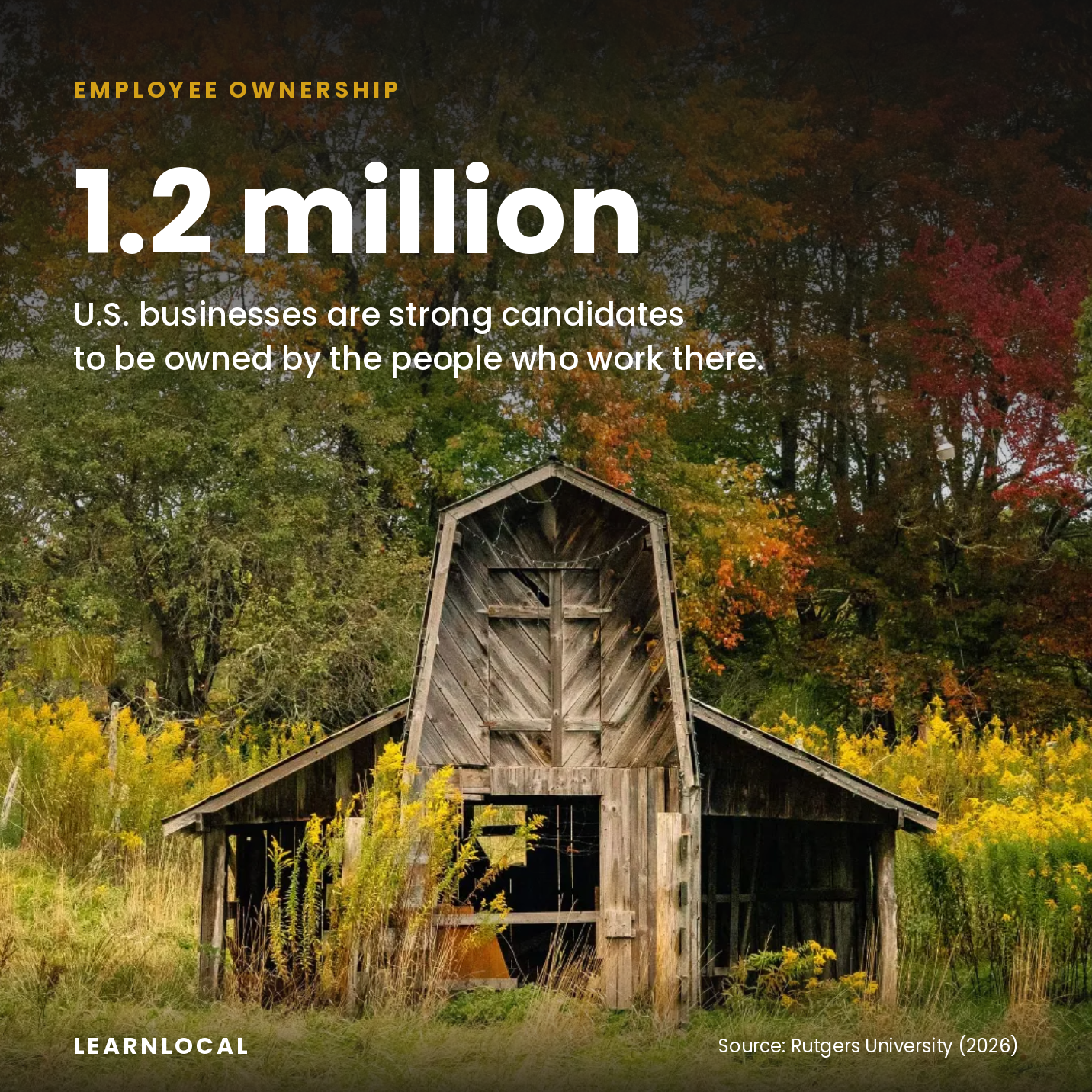
The researchers also estimate that about 1.2 million U.S. businesses are strong candidates for this kind of transition.
How employees become owners
There are two main routes. In an employee stock ownership plan, or ESOP, a trust buys the company on the employees' behalf and workers build up shares over time. In a worker cooperative, the employees own the business together and each has a vote. Either way, the Rutgers team notes, employees build wealth alongside their wages and the business stays rooted in its community.
Why this matters for local
Shopping local keeps money close to home. Ownership decides where that money lands over the long run. When a local business is sold to an outside company, the profits leave with it. When the people who run it every day own it, the profits stay where they're earned.
The future of business is small.
If you run an independent business, get listed on LearnLocal. Everyone else, join Team Local and help keep the money on the block.